Ledger.com/Start – A Fresh 1200-Word Guide
Ledger.com/start is the official beginning point for setting up a Ledger hardware wallet. It is the place where new users are guided through installation, device activation, app setup, and essential safety practices. Since hardware wallets store private keys offline, this setup page plays an important role in helping users understand how to use their device correctly and securely. The following guide offers a clear, 1200-word explanation of the concepts, steps, and features involved—presented in a simple, beginner-friendly way.
Understanding the Purpose of Ledger.com/Start
The primary purpose of ledger.com/start is to walk users through the initial setup process. When someone purchases a Ledger device—such as Ledger Nano S Plus or Ledger Nano X—the next step is to access the setup guide. This ensures the device is activated correctly and the user receives accurate instructions.
Ledger hardware wallets are built around the idea of offline protection. Instead of depending on a phone, browser extension, or online wallet, Ledger devices keep private keys inside a secure chip. This means that even if a computer is compromised, the private keys remain safe. Ledger.com/start explains this model and teaches users how to operate the device safely.
Getting Started With a Ledger Device
The setup journey usually begins with unboxing the hardware wallet and connecting it to a computer or mobile device. The guide instructs users to download Ledger Live, the companion application that communicates with the hardware wallet. This software is used for managing accounts, checking balances, installing blockchain apps, and performing device updates.
The setup page also emphasizes the importance of verifying the device's integrity. Users are taught to confirm that their Ledger wallet arrived sealed, uninitialized, and free of tampering. This is critical because hardware wallets must always be purchased from trusted sources.
Device Initialization and PIN Creation
One of the first actions during setup is creating a PIN. This PIN protects the device whenever it is powered on. Ledger.com/start highlights the importance of choosing a PIN that cannot be easily guessed. While the PIN prevents unauthorized physical access, it is only one part of the security process.
After the PIN is created, the device generates a recovery phrase. This phrase, made up of a series of words, is the most important part of a hardware wallet. It acts as the backup for the entire wallet. Ledger’s approach is that the user must store this phrase securely and never share it with anyone. The phrase must never be typed on a computer or phone. It must never be photographed or stored online. The guide emphasizes that the user is the only one who should ever have access to the recovery phrase.
Ledger.com/start explains that this phrase is the only way to recover the wallet if the device is lost, damaged, or replaced. Because of that, users are encouraged to write it on paper or store it in a secure physical medium that cannot be easily damaged.
Installing Ledger Live
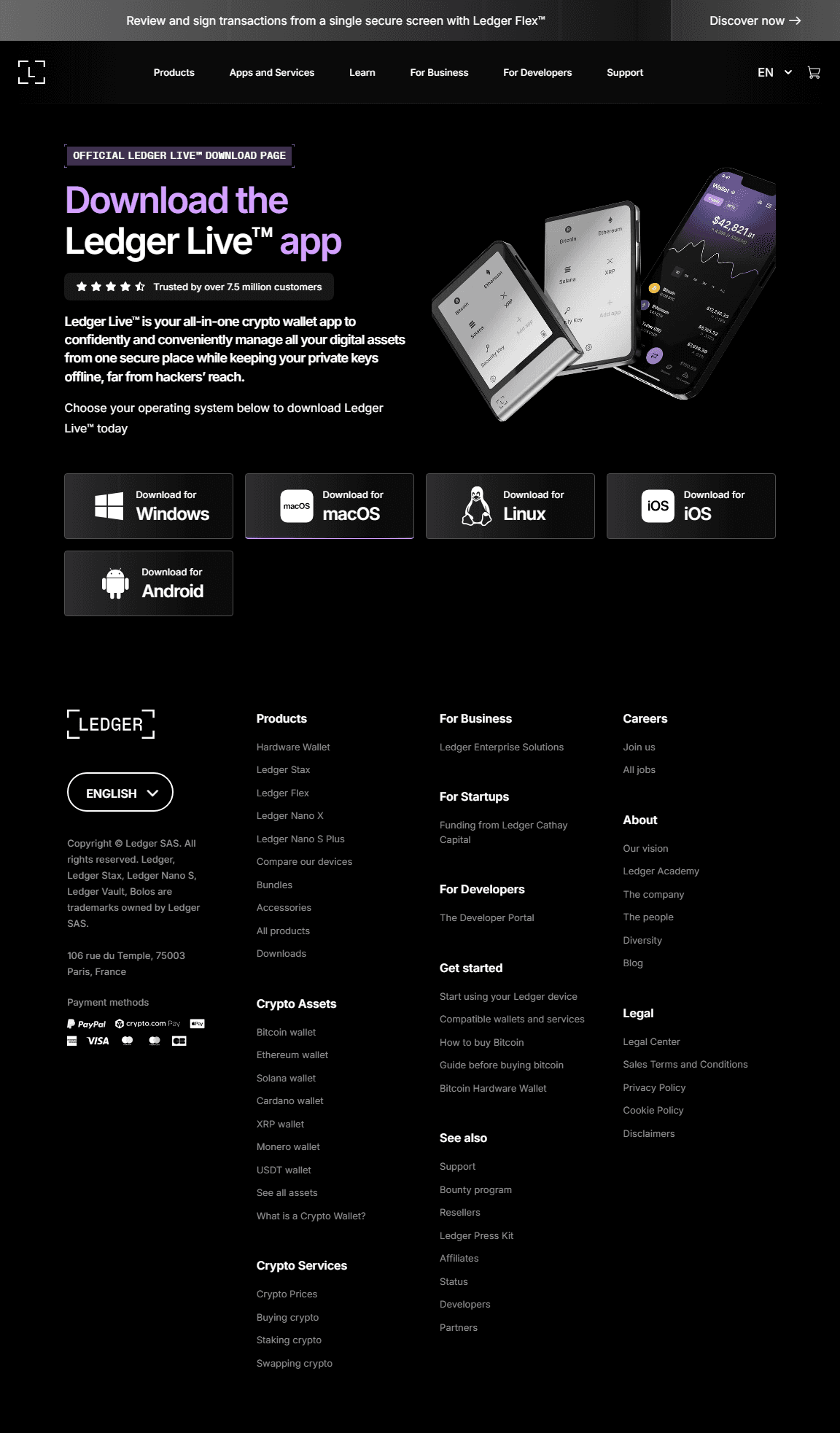
Ledger Live is the official application used alongside Ledger hardware devices. The setup guide directs users to download Ledger Live from the proper source, ensuring the version is legitimate and safe. After installation, the app walks the user through the connection process.
The purpose of Ledger Live is to manage supported cryptocurrencies, update the device, and install blockchain apps. Although Ledger Live manages accounts, it never stores private keys; the hardware wallet keeps those offline. This separation is what forms Ledger's strong security foundation.
Installing Blockchain Apps
Once the device is initialized and Ledger Live is installed, users can begin adding apps to their Ledger device. Each blockchain—such as Bitcoin, Ethereum, Solana, or others—requires its own app. Ledger Live provides an easy interface to install, update, and delete these apps.
The guide at ledger.com/start explains that installing apps does not store cryptocurrency. It only enables the device to understand different blockchains. The user's funds remain associated with the private keys generated earlier.
Apps can be added or removed at any time, and doing so does not affect stored assets. This flexibility allows users to manage storage on smaller Ledger devices.
Adding Accounts in Ledger Live
After blockchain apps are installed, the next step is adding accounts in Ledger Live. Accounts help Ledger Live display balances, track portfolios, and keep transaction history organized.
The setup guide teaches users how to add accounts safely. For example:
Select a blockchain network
Connect and unlock the hardware wallet
Verify account details on the device
Allow Ledger Live to synchronize information
Once the account is added, users can view their portfolio and track their balances in real time.
Sending and Receiving Assets
Ledger.com/start includes instructions for sending and receiving digital assets. When receiving assets, users must always verify the receiving address on the hardware wallet screen. This step ensures that the address displayed on the computer matches the one confirmed by the secure device.
When sending assets, Ledger Live prepares the transaction, but the hardware wallet requires a physical confirmation. The user confirms the amount, destination address, and network fee on the device before approving.
This process ensures that no transaction can occur without the user’s manual approval. Even if a computer is compromised, the device prevents unauthorized transfers.
Understanding Ledger’s Security Model
The guide explains why Ledger devices are trusted for secure asset management. The core security principles include:
1. Offline private key storage
Private keys never leave the hardware wallet. They cannot be extracted or viewed from any computer or phone.
2. Secure chip technology
Ledger wallets use a certified secure chip designed to protect sensitive information from physical attacks.
3. Physical confirmation
Every critical action must be approved by pressing buttons on the device itself.
4. User-controlled recovery phrase
The recovery phrase is generated offline and controlled solely by the user.
5. Independent verification
The hardware device always displays transaction details for confirmation.
This structure gives users confidence that their digital assets remain protected even in unpredictable environments.
Maintaining the Device
Ledger.com/start provides tips for maintaining the hardware wallet. This includes:
Updating Ledger Live regularly
Installing the latest firmware
Keeping the device stored safely
Protecting the PIN
Preserving the recovery phrase
Updates often enhance compatibility, improve performance, and strengthen protective features.
Restoring a Device Using the Recovery Phrase
The setup guide also teaches users how to restore a device using their recovery phrase. If a device is lost, replaced, or reset, the recovery phrase allows the user to regain full access to the same accounts and assets.
Restoration involves:
Selecting the recovery option on the device
Entering each word of the recovery phrase
Creating a new PIN
Reconnecting to Ledger Live
This process reinforces the importance of safeguarding the recovery phrase at all times.
Why Ledger.com/Start Is Important
Ledger.com/start is more than a setup page—it is the foundation for safe, long-term digital-asset management. It ensures that users start their journey with correct instructions, trustworthy tools, and essential knowledge. It explains security practices clearly, making sure users understand how to operate their device responsibly.
Whether someone is brand-new to digital assets or experienced with multiple blockchains, the guide supports them through every crucial step. It remains a dependable resource for learning, updating, restoring, and using Ledger devices securely.