Ledger.com/Start: A Fresh 1200-Word Guide
Ledger.com/Start is the official place where users begin setting up their Ledger hardware wallet and learning how to manage their digital assets securely. The purpose of this guide is to explain what happens during setup, how Ledger devices work, what Ledger Live does, and why this platform is built around strong security principles. This is a full 1200-word explanation, written in a simple and clear way while still covering everything you need to know.
Introduction to Ledger Devices
Ledger devices are hardware wallets designed to keep private keys offline. Private keys are what allow people to access and use their digital assets. Instead of storing these keys on a computer or phone, Ledger keeps them inside a secure chip inside the physical device. This chip is engineered to prevent extraction, even if the connected computer is unsafe.
The purpose of Ledger.com/Start is to guide users through the entire process—from unboxing the device to activating it, installing apps, and learning how to keep everything protected.
Why Ledger.com/Start Matters
The digital-asset world can be confusing, especially for beginners. There are many platforms, different blockchains, and a lot of misinformation online. Ledger.com/Start simplifies everything into a structured and safe path. It helps users:
Set up their hardware wallet the correct way
Learn how to use Ledger Live
Understand essential safety rules
Manage accounts and networks
Stay aware of best practices
This guided approach reduces mistakes and ensures users have a reliable foundation before interacting with any digital assets.
Unboxing the Device: What Users See First
When users open their Ledger hardware wallet package, they usually find:
The hardware device
A USB cable
A set of recovery sheets
Instructions
Sometimes additional accessories depending on the model
The recovery sheets are extremely important because they are used to write down the recovery phrase. The device does not come with a recovery phrase; users create it themselves during setup. Ledger.com/Start explains this clearly, so users understand that any phrase found in a box or shared by anyone is unsafe.
Connecting the Device for the First Time
At Ledger.com/Start, users are directed to connect their device to their computer using the provided cable. The guide explains how to turn on the device, navigate with its buttons, and follow the instructions on the hardware screen.
The hardware wallet will ask the user to:
Choose a PIN
Generate a recovery phrase
Confirm it
Save it securely offline
Ledger does not store or copy the recovery phrase. It exists only on the user’s device and recovery sheet. If the device is lost or damaged, the recovery phrase is what allows the user to restore access on a new Ledger device.
Understanding the Recovery Phrase
The recovery phrase is a group of words that act as the master key to all accounts. Ledger.com/Start focuses heavily on teaching users to protect this phrase. It must never be photographed, typed into websites, saved online, or shared. The safest storage is offline, in a place only the user can access.
The guide also emphasizes that no employee, support agent, or platform should ever ask for the recovery phrase. Protection of this phrase is the core of digital-asset security.
Installing Ledger Live
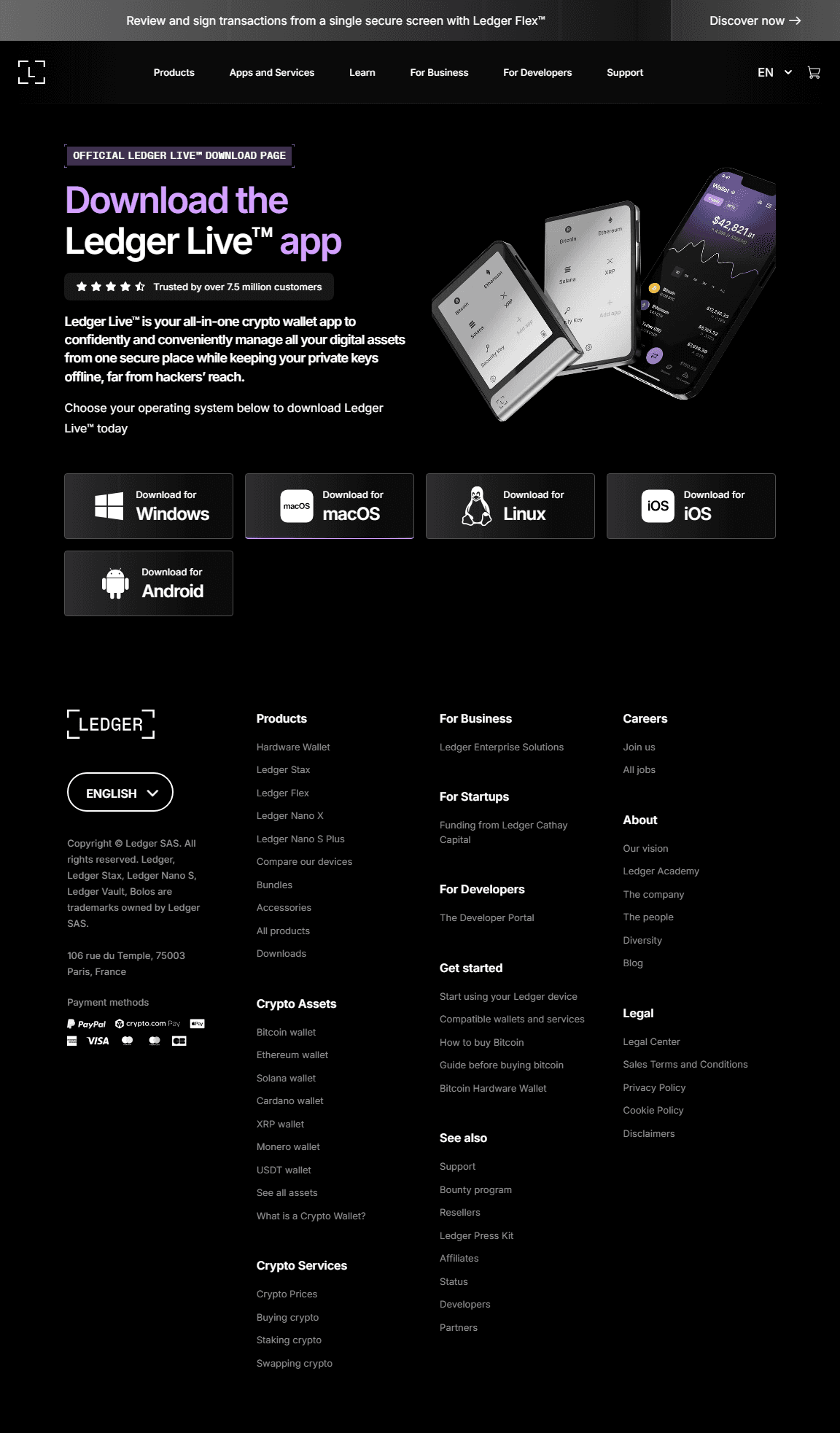
After the device is set up, Ledger.com/Start instructs users to install Ledger Live, which is the official desktop or mobile application for managing Ledger devices. Ledger Live acts as the dashboard where users can:
Add blockchain accounts
View balances
Send and receive assets
Install hardware apps
Update firmware
Track portfolio performance
Ledger Live is the software part of the system, while the device is the hardware vault.
Adding Accounts in Ledger Live
Blockchain networks require separate accounts. For example, Bitcoin, Ethereum, and other networks each need their own account setup. Ledger.com/Start explains how to add these accounts in Ledger Live. Once added, Ledger Live can display balances and histories.
However, private keys for these accounts never leave the hardware device. Ledger Live only displays information and sends requests, which must be confirmed on the device before anything happens.
How Apps Work on Ledger Devices
Each blockchain requires a specific app installed on the hardware wallet. The Ledger Manager tool inside Ledger Live helps users install these apps. For example:
The Bitcoin app allows Bitcoin transactions
The Ethereum app supports Ethereum accounts and tokens
Additional apps support other blockchains
Ledger.com/Start explains that apps are small programs that allow the device to understand each network. Installing or updating these apps does not affect stored assets.
Firmware Updates
Over time, Ledger releases firmware updates to add new features, improve safety, or support additional blockchains. Ledger.com/Start teaches users how to safely install these updates. The process usually involves:
Connecting the device
Opening Ledger Live
Going to the Manager section
Following the step-by-step update guide
Updates are important but must always be done through Ledger’s official instructions.
Sending and Receiving Digital Assets
Once accounts are set up, users can send and receive assets through Ledger Live. Ledger.com/Start explains that receiving assets requires generating a receiving address. This address must always be verified on the hardware screen to avoid tampering.
For sending assets, users enter the destination address, amount, and network fees in Ledger Live. The device will then display the transaction details for the user to approve. Nothing is sent until it is physically confirmed.
This two-step system is the foundation of Ledger’s security design.
Understanding Ledger’s Security Layer
The platform at Ledger.com/Start highlights multiple layers of protection:
Private keys stay offline
Every action requires physical confirmation
Recovery phrases are user-generated and never shared
Ledger Live only acts as a viewer, not a key holder
This approach ensures that even if a computer is infected with malware, the attacker cannot access the user’s private keys or send unauthorized transactions.
Portfolio and Market Tracking
Ledger Live includes portfolio tracking tools that show:
Price changes
Asset distribution
Value evolution
Individual transaction histories
These tools help users understand their holdings without needing external apps. However, Ledger.com/Start reminds users that digital-asset prices are volatile and should be approached thoughtfully.
Advanced Options for Experienced Users
Ledger.com/Start also includes optional advanced topics, such as:
Custom network configurations
Experimental features
Developer tools
Ledger Connect support
Integrations with external platforms
These are designed for users who have more experience and want additional control.
Safety Tips Highlighted at Ledger.com/Start
The platform includes safety rules that apply universally:
Never share the recovery phrase
Verify all addresses on the device screen
Keep the hardware wallet physically secure
Download Ledger Live only from the official source
Stay aware of scams and fake support agents
These guidelines help protect users from common risks in the digital-asset space.
Conclusion: Why Ledger.com/Start Is Important
Ledger.com/Start gives users a structured, safe, and trusted path to begin using their Ledger hardware device. It explains the setup, the meaning of the recovery phrase, how Ledger Live works, and how to manage assets securely. By guiding users step-by-step, it removes confusion and builds confidence—making it easier for anyone to protect their digital assets using a hardware wallet that keeps private keys offline.